



There comes a moment in many families when the question quietly takes shape: “Are we still doing right by Mom at home?” It’s rarely a question anyone wants to confront, yet it often surfaces after a fall, a sudden change in mood, or a creeping sense that the daily rhythm of care has become too fragile to sustain.
Knowing when to move a loved one to assisted living isn’t just a practical choice—it’s an emotional crossroads that balances safety, independence, and love. Many families delay this decision because they fear it means “giving up,” but in my experience, assisted living done right can actually restore dignity, safety, and connection.
This guide will help you spot the real signs that it may be time, understand what they mean, and navigate the decision with clarity and confidence.
Understanding What Assisted Living Really Means
Before recognizing the signs, it’s worth clarifying what assisted living actually is—and what it is not.
Assisted living is designed for older adults who can still manage many aspects of daily life but require help with specific tasks like bathing, dressing, medication management, or meal preparation, often called activities of daily living (ADLs). It’s not the same as a nursing home, which provides round-the-clock medical care and skilled nursing services.
A good assisted living community strikes a balance: it provides safety, structure, and socialization while supporting as much independence as possible. What most people don’t realize is that the decision isn’t about “needing a facility.” It’s about ensuring your loved one has the right environment to live as fully and safely as possible.
The Early Warning Signs Families Often Miss
In the beginning, changes happen slowly. A forgotten appointment here, an untouched meal there. Families often rationalize these shifts because the alternative—admitting that more help is needed—feels painful. But early detection can make the transition smoother and prevent crises later.
1. Increasing Difficulty with Daily Tasks
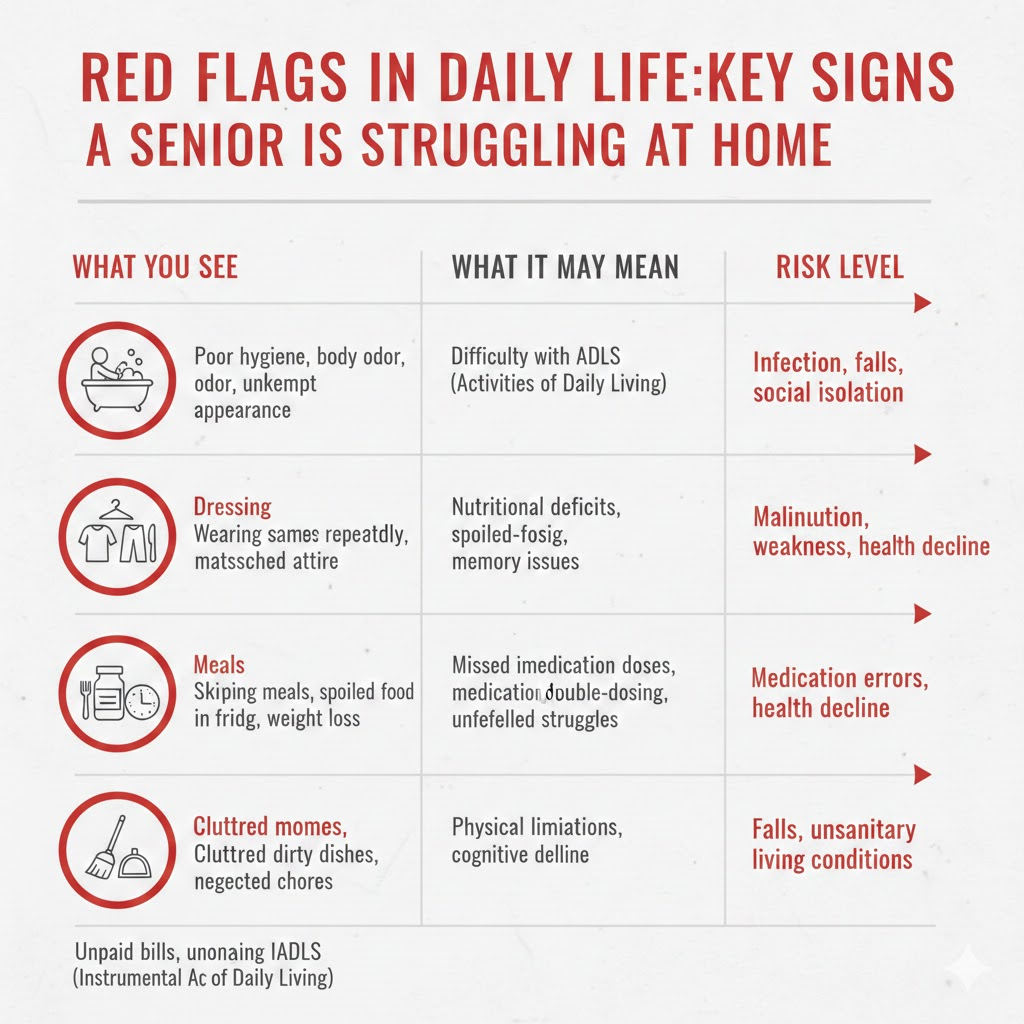
Watch for patterns in Activities of Daily Living (ADLs) such as:
- Dressing appropriately for the weather or season
- Remembering to take medications on time
- Keeping up with personal hygiene
- Managing basic household chores
Consistent difficulty with ADLs is one of the clearest signals that assisted living might be needed, and you can use checklists like this ADL guide to track changes over time. If these activities cause frequent frustration, confusion, or neglect, it’s a strong sign that living independently is becoming unsafe.
2. Frequent Falls or Near Misses
Falls often serve as a tipping point. Even one bad fall can dramatically change quality of life, leading to hospitalizations, fear, and reduced mobility. Each year, more than one in four adults over 65 experiences a fall, and it is a leading cause of serious injury in older adults, according to the CDC.
If you notice unexplained bruises, stories that don’t quite add up, or increasing unsteadiness, it may be time to consider whether the home environment and current support are still appropriate.
3. Noticeable Weight Loss or Poor Nutrition
Unopened groceries, expired food in the fridge, or skipped meals can indicate that cooking and meal planning have become too complex or overwhelming. Malnutrition accelerates cognitive and physical decline and increases fall risk, which is why many communities emphasize
In my experience, families often notice “Mom is just picking at food” months before they connect it to a bigger pattern.
4. Withdrawal or Social Isolation
It’s surprisingly easy for loneliness to masquerade as “just wanting to be left alone.” When older adults stop engaging with friends, church, or hobbies they once loved, it often signals depression or anxiety. Chronic isolation has been linked to worse physical and mental health outcomes in older adults, and organizations like the National Institute on Aging warn about its long-term impact.
Assisted living can reintroduce community and purpose—two ingredients that profoundly affect well-being.
Behavioral and Cognitive Red Flags
When cognitive changes emerge, the signs are often subtle at first. But as memory lapses turn into safety risks, families need to pay attention.
1. Increasing Confusion or Disorientation
Getting lost in familiar places, mixing up dates, or repeatedly asking the same questions may indicate the onset of dementia or another cognitive disorder. The Alzheimer’s Association’s list of early warning signs is a useful reference if you’re seeing these patterns more often.
While family members try to fill in the gaps, there’s only so much patchwork possible before safety becomes a concern.
2. Poor Judgment or Unsafe Behavior
Leaving the stove on, falling for phone scams, or wandering outside at night are all practical red flags. These behaviors are emotionally hard to acknowledge because they confront you with how much has changed—but ignoring them can lead to tragedy.
If you’re noticing safety issues, talking with a geriatric care manager or social worker can help you evaluate risk more objectively.
3. Emotional Volatility
Uncharacteristic irritability, paranoia, or mood swings can signal underlying health issues, medication interactions, or cognitive decline. Sometimes these changes result from feeling overwhelmed by daily stressors that used to be manageable—stressors an assisted living environment can buffer through routine, structure, and staff support.
Physical and Environmental Clues You Shouldn’t Ignore
Sometimes the strongest clues come not from behavior but from their surroundings. The state of your loved one’s home can reveal a lot.
Look for:
- Household neglect: Cluttered rooms, unpaid bills, or unwashed laundry stacking up
- Spoiled food: A refrigerator full of expired items
- Medication errors: Empty bottles, misplaced pills, or skipped doses
- Neglected safety measures: Lack of grab bars or loose rugs that become tripping hazards
These may seem like small issues separately, but together they create an environment that no longer supports safe living. Home safety checklists like this CDC fall prevention guide can help you evaluate risks systematically.
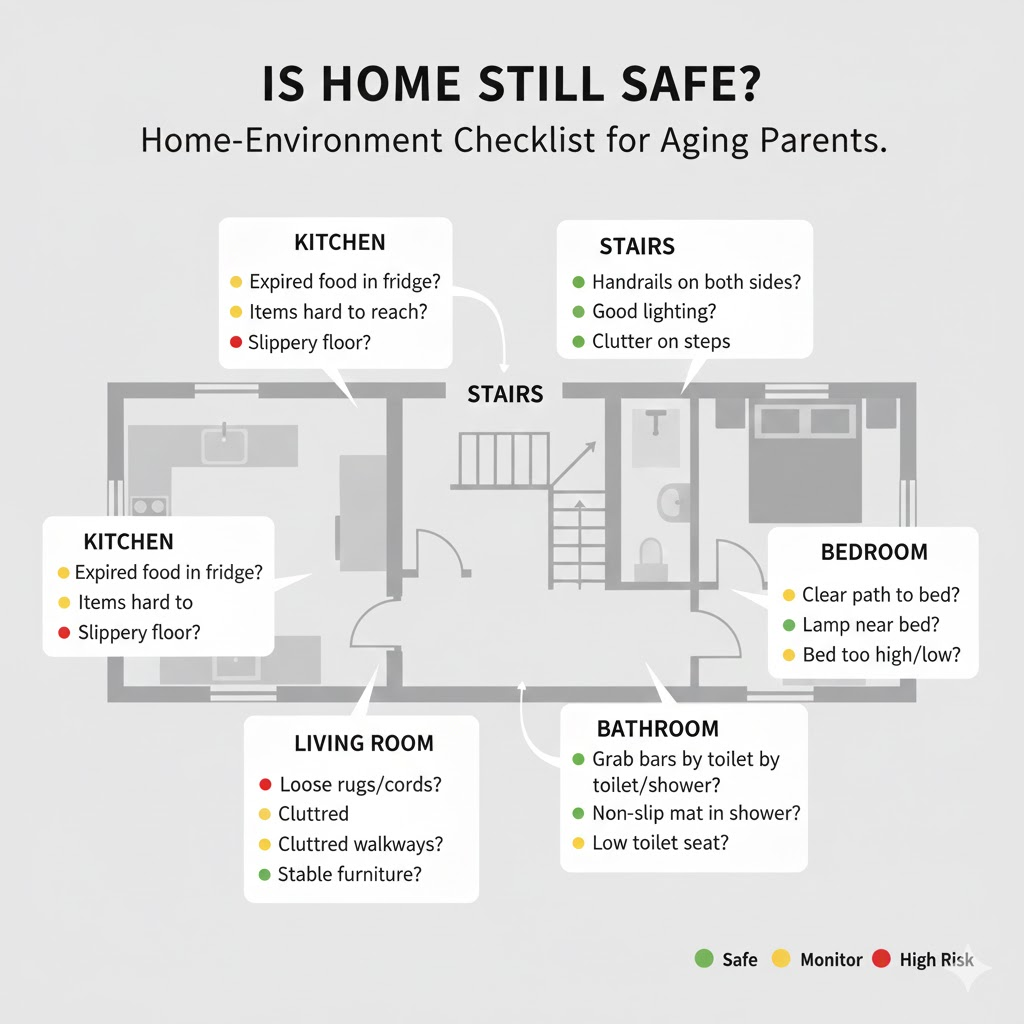
This is an ideal place because you’ve just described environmental signs; a visual home checklist makes this instantly actionable.
Emotional Patterns That Signal Too Much Strain
This part is often overlooked, but it matters. Even if your loved one technically manages daily tasks, emotional strain can signal underlying decline.
Common signs include:
- Increased anxiety: Worrying excessively about simple routines
- Hopelessness: Expressing thoughts like “I don’t want to be a burden”
- Resistance to help: Pushing away family assistance out of pride or fear
Contrary to what some families fear, moving into assisted living doesn’t erase independence—it can protect it by ensuring safety and stability while easing emotional load. Guides like AARP’s family caregiving resources can also help you understand how emotions and care needs intersect over time.
Common Misconceptions About Assisted Living
“We can manage things at home with enough support.”
Sometimes that’s true—especially with in-home caregivers or modifications like stair lifts and grab bars. But families often underestimate the emotional toll of long-term caregiving, which can lead to caregiver burnout.
Resources on caregiver burnout and caregiver stress describe how chronic strain can affect your health, relationships, and ability to provide safe care.
“Mom will never adjust to living with strangers.”
Most residents do experience an adjustment period—but it’s rarely as lonely or alienating as families imagine. Many assisted living communities intentionally foster connection through shared meals, group activities, and interest-based programs, as you’ll see in many community “life enrichment” or “activities” calendars online.
What often surprises families is that their loved one may regain energy, routine, and a sense of belonging once chronic isolation is reduced.
“It’s too expensive, so we have no choice but to wait.”
Cost is a legitimate concern. But waiting can make the eventual move more expensive—because it often happens after hospitalization or injury, when higher care levels are needed. Tools like long‑term care cost calculators can help you compare in-home care versus assisted living over time.
Exploring options early allows families to budget wisely and compare communities based on value, not panic.
When You’re the Caregiver: Knowing Your Limits
Assisted living isn’t just about your loved one—it’s also about you. Many family caregivers quietly shoulder increasing responsibilities until burnout sets in.helpguide
Some signs you may need to consider a transition:
- You’re losing sleep from constant worry
- You feel ongoing resentment, guilt, or exhaustion
- You’re neglecting your own health or relationships
- Every errand feels like an emergency
The Caregiver Action Network and the National Institute on Aging’s caregiving hub both outline how chronic stress can progress into full burnout if support is not added. Assisted living doesn’t mean you’re abandoning your loved one—it means you’re rebalancing roles so you can go back to being a son, daughter, or spouse, not just a tired caregiver.
YOUTUBE VIDEO – INSERT HERE
Suggested video: “Caregiver Burnout: How to Reverse Course | A Place for Mom”
URL:
This fits perfectly here because the section is about caregiver limits and burnout, and the video speaks directly to that emotional reality for families.
How to Start the Conversation
Few topics are trickier. How you approach it matters as much as what you say.
- Choose the right moment. Avoid raising it in crisis or right after a fall; wait for a calm, quiet time.
- Lead with empathy. Use “I” statements: “I’m worried about your safety” instead of “You can’t live alone anymore.”
- Involve them early. Visit communities together, ask for their impressions, and listen deeply.
- Frame it as empowerment. Position assisted living as a choice that protects their independence, not removes it.
Organizations like Family Caregiver Alliance offer scripts and conversation tips if you’re unsure how to begin.
Practical Steps to Assess Readiness
If you’re unsure whether now is the right time, a structured evaluation can help.
- Start with a comprehensive medical review. Consult your loved one’s physician and ask specifically about safety, cognition, and fall risk.
- List daily challenges. Use simple forms or ADL checklists to document where assistance is already needed and how often.
- Tour communities. Visiting two or three local assisted living communities (many have “Signs It’s Time” checklists on their websites, like this example) can clarify what support looks like day-to-day.
- Seek professional assessments. A geriatric assessment can bring together medical, functional, and cognitive information to guide decisions.
In my experience, having this information on paper reduces family conflict and second‑guessing.
Best Practices for a Smooth Transition
Where things often go wrong is when families expect instant happiness after move‑in. Adjustment is gradual, but there are ways to make it easier.
- Start small. Consider a short respite stay (many communities offer this) before a permanent move.
- Personalize the new space. Bring familiar furniture, photos, and keepsakes; this is strongly recommended in many transition guides for people with memory issues.
- Stay involved. Regular visits, phone calls, and attending activities together can ease the sense of loss and change.
- Revisit expectations. Most communities recommend giving it at least 30–90 days before making big judgments about “fit.”polarridgeseniorliving
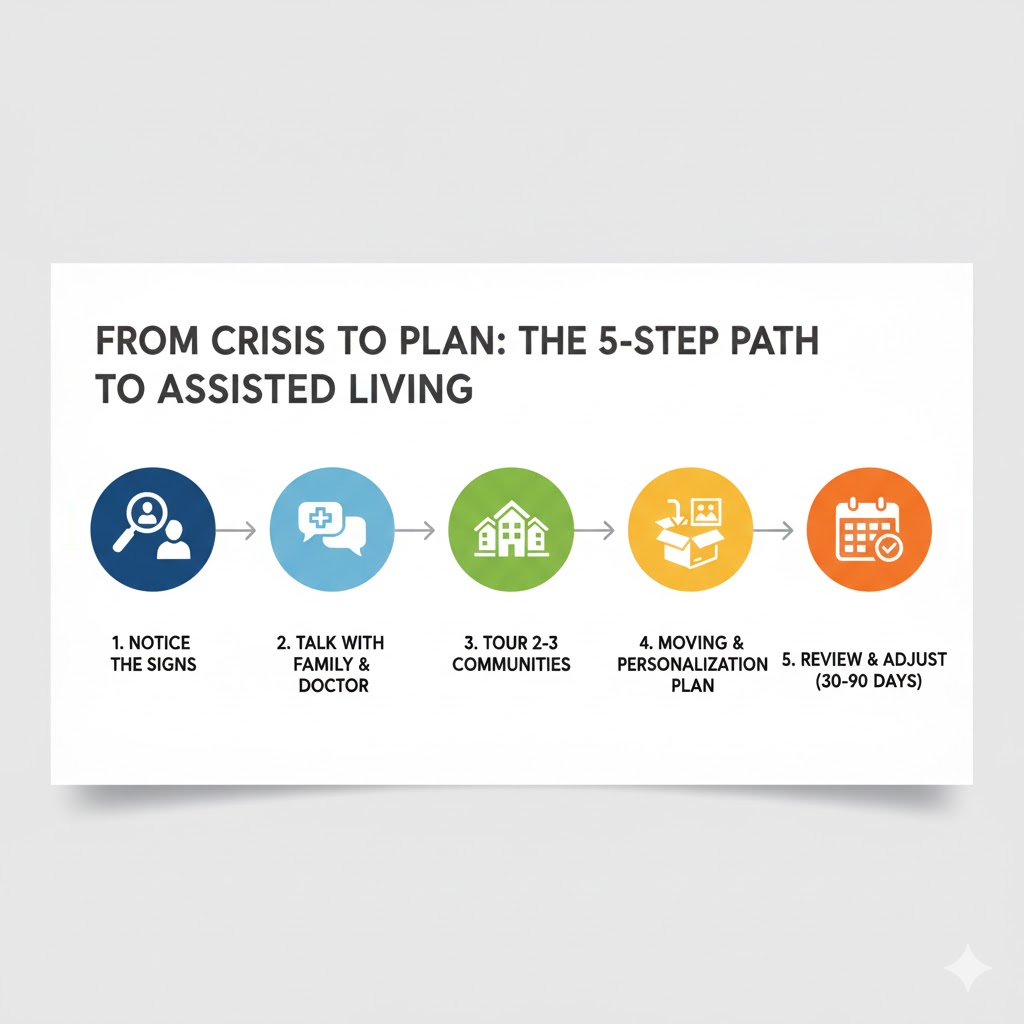
This works well near the transition section because it visually summarizes the journey from recognizing signs to settling in, giving overwhelmed readers a quick roadmap.
When It Might Not Be Time (Yet)
It’s important to acknowledge that assisted living isn’t always the right answer—at least not immediately.storypoint
- If your loved one only needs occasional help and the home can be safely modified, aging in place with home care services may still be preferable.
- If cognitive changes are mild and they have strong social connections, adding adult day services or part‑time home care might be enough for now.
- If trust or cultural comfort is a concern, starting with adult day programs or respite stays can help your loved one “test drive” supportive settings.
The goal isn’t to rush the move—it’s to align care with current needs while planning for future possibilities.
Conclusion: Moving from Guilt to Confidence
Recognizing it’s time to move a loved one to assisted living doesn’t mean you’ve failed—it means you’re choosing safety, dignity, and continuity of care over wishful thinking.
What most families find, once the initial fear passes, is peace of mind: knowing their parent or spouse is safe, supported, and socially engaged again. They can finally exhale—and return to being a family rather than full‑time caregivers.